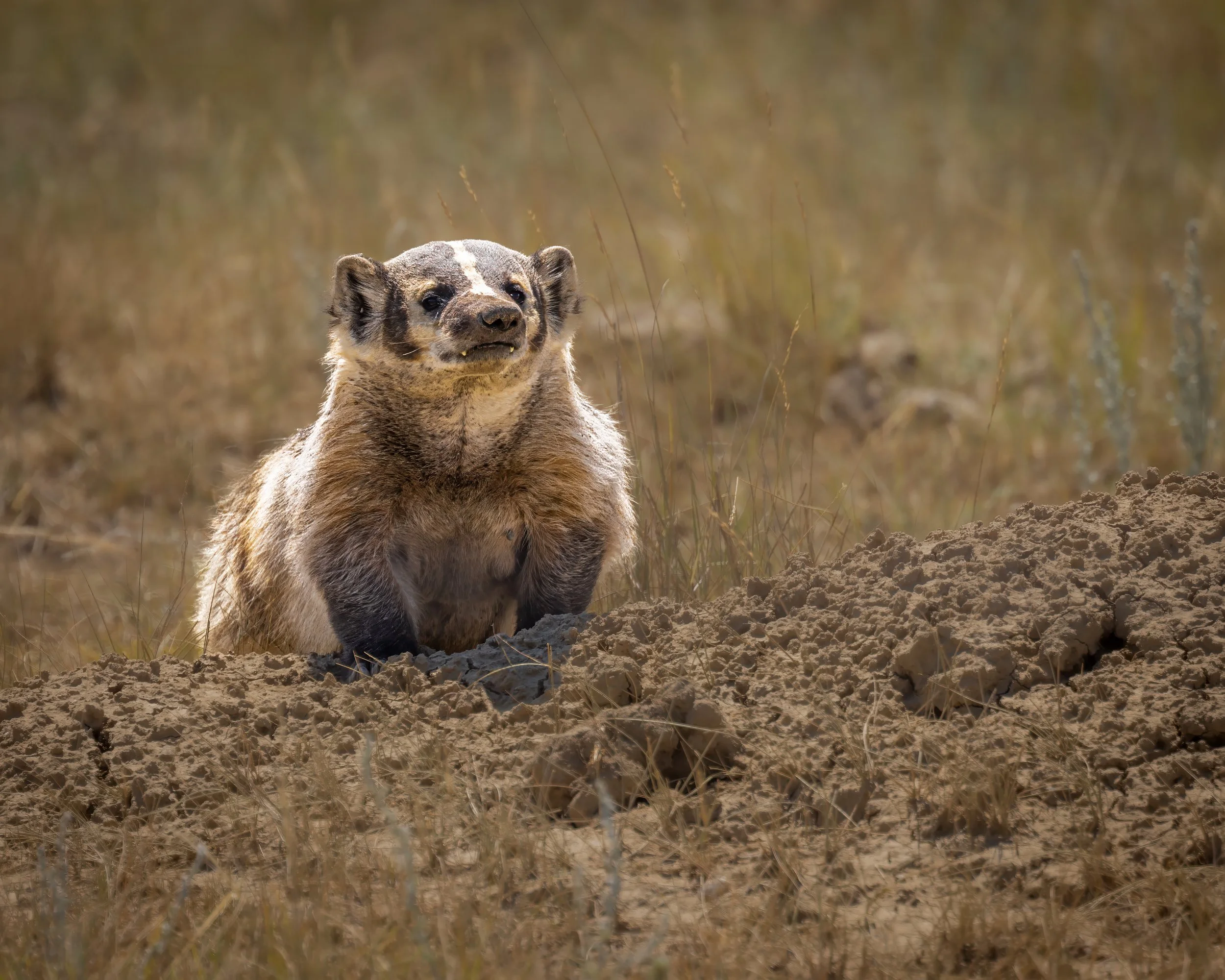

What is a badger?
Member of the weasel family (Family Mustelidae)
Medium-sized carnivores
Fossorial, spending much of their lives underground
Only true burrowing predator in Canada


There are 4 subspecies of American badger found throughout North America. Badgers occurring in the Canadian prairie are referred to as: Taxidea taxus taxus.
In Canada, this subspecies commonly occurs in mixed-grass and cold desert habitats across Alberta, Saskatchewan and Manitoba.
Listed as Special Concern by the Committee on the Status of Endangered Wildlife in Canada (COSEWC Status Report, 2012).
At present, no population estimates are available for badgers across all three prairie provinces.
Leading threats include loss of native prairie, road mortality, removal of primary prey (e.g. ground squirrels) and persecution.
Distribution, Status and Threats
Biology and Behaviour

Photo credit: Gord Court
-
Badgers on the prairies are most often found in: parkland, prairie and cold desert area with availability of preferred prey and friable soils (such as silt or loamy soils, or soils that when tunneled are not likely to collapse).
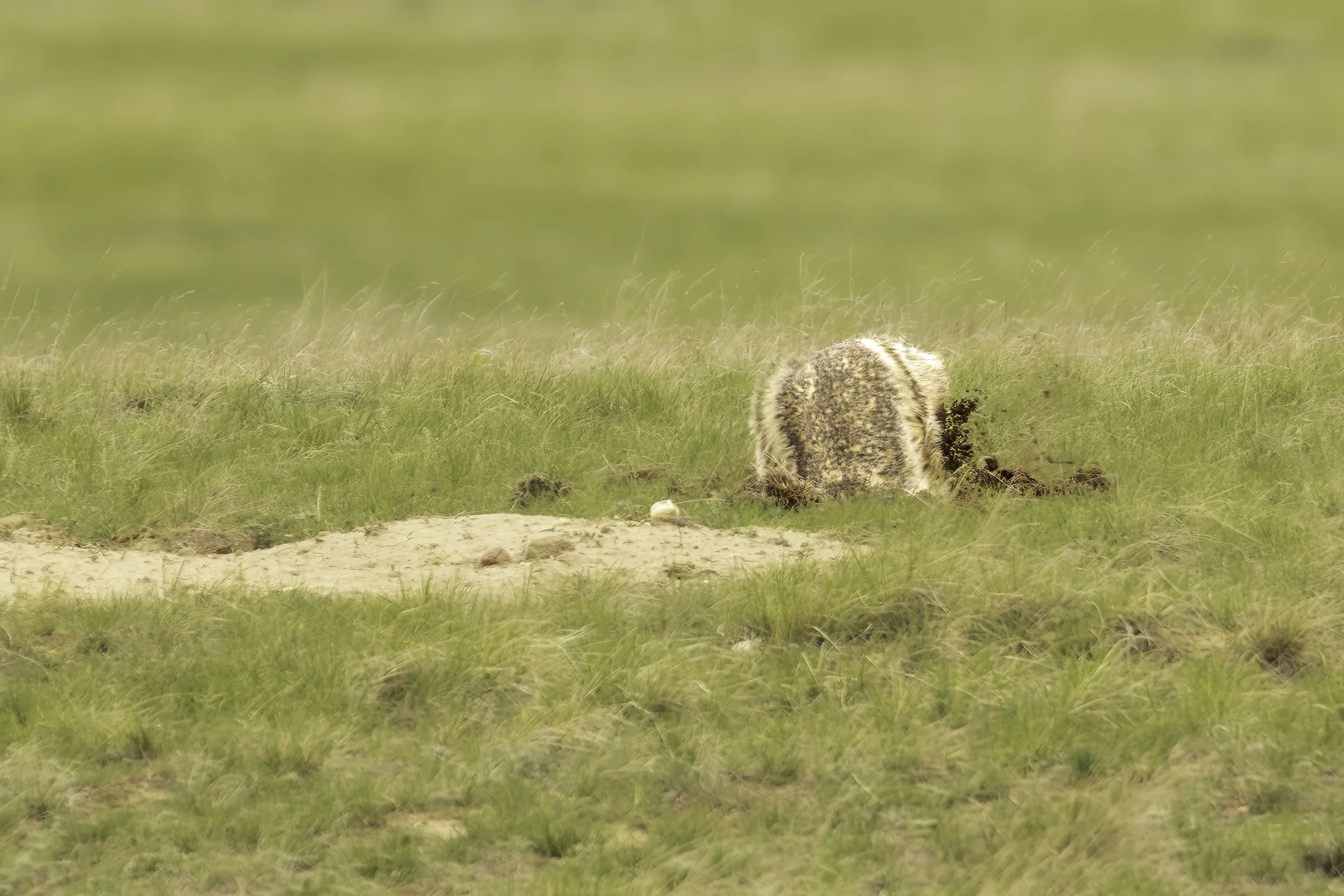
Badgers excavate and live in burrow networks, or “setts”, which can consist of just a single entrance or multiple entrances with a series of underground chambers and tunnels that they will reuse over time. Some setts are known to be hundreds of years old.
Badgers are tolerant to human development and infrastructure and are often found burrowing near building and into roads and cutbanks.
-
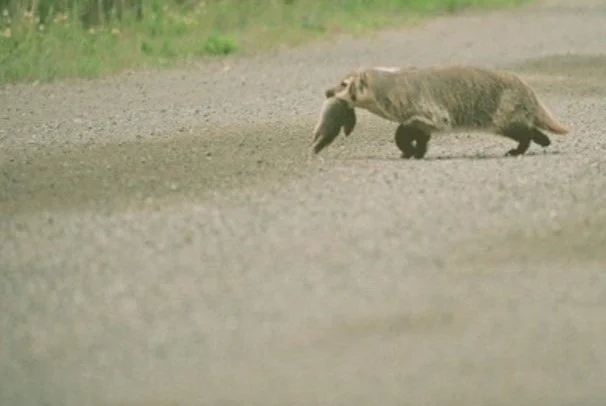
Badgers are opportunistic carnivores and will predate on a range of smaller prey. While their preferred prey are small rodents (such as ground squirrels, pocket gophers and prairie dogs), they are found feeding on snakes, muskrat and bird eggs and others.
-
Badger live up to 6 years in the wild, longer in captivity.
They mate between July and August.
Experience delayed implantation.
Give birth to an average of 2-3 young (kits) in the spring (March - April).
Mothers rear their young between mid-April to-mid August. Badgers are most sensitive to disturbance during this maternal period.
-
Both home range sizes and the number of badgers found in an area greatly depends on resource availability and distribution.
Home range is known to increase during the breeding season and can range from approx. 2 - 300 km2 for males, and 2 – 19 km2 for females.
Dispersal distances also vary and can be up to approx. 52 km for females and 110 km for males.
-
Badgers are generally solitary. When in family groups, they display kindship and playfulness.
Benefits of Badgers
-
![]()
Regulate small mammals
Badgers are highly effective predators of small mammals, reducing the impact of excessive foraging on vegetative communities by overabundant species such as ground squirrels and prairie dogs.
They are estimated to consume 2-3 ground squirrels per day, reducing a population by 50% while in the area.
For context, a few badgers are capable of preying on over 300 ground squirrels in a summer season and 300 ground squirrels = 1 AUM, equivalent to 1 cow calf pair.
-
![]()
Improve prairie health
Badgers dig… and though not always ideal - these excavations are important natural disturbances for grassland ecosystem health. Burrow networks created by badgers improves:
Soil structure and composition
Water infiltration and aeration
Nutrient cycling and organic decomposition rates
vascular plant diversity, and support variety of soil invertebrates.
The presence of badgers on the land is a good indicator or rangeland health and ecosystem resilience.
-
![]()
Create habitat for others
Badgers are also considered keystone species, creating burrow networks for their own purposes as well as critical habitat for many grassland species. Vacant foraging and resting burrows create habitat for a wide range of secondary users.
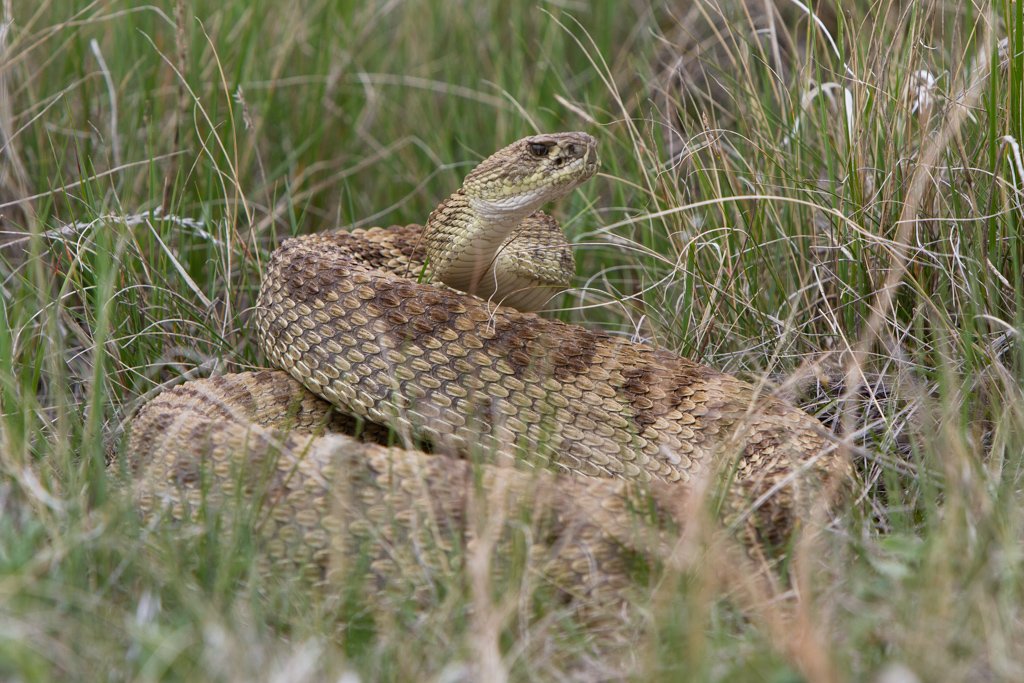
Several Species-At-Risk depend upon burrow including: Western rattlesnake, Great Basin Spadefoot toad, Western Tiger salamander as well as Federally Endangered Burrowing owl and Swift fox.
Living with Badgers
Suggested Best Management Practices for Land Owners and Land Managers
Manage Vegetation
In areas of concern, allow vegetation to grow taller. This reduces habitat for ground squirrels, badgers primary prey.
Manage Operations
When possible, avoid surface and below-ground disturbance near active badger burrows. Badgers are most sensitive to disturbance during the maternal period (April 15 - August 15).
Manage Attractants
Avoid placing attractants within approx. 50m from areas of known badger activity to avoid burrow collapse by livestock concentrations. Attractants may include: salt licks, water troughs and feed bins.
Additional resource: https://multisar.ca/wp-content/uploads/2015/10/Burrowing-Animals.pdf